
Agentic investigations
The QA Wolf agent takes the first pass at diagnosing failed tests.
From investigating to reviewing
A failed test doesn't explain what went wrong. Is the product broken, or does the test need updating?
The agent takes the first pass. I helped design how people review its diagnosis, check the evidence, and correct it when it misses something.
UX research
I shadowed and interviewed QA engineers who regularly investigate test failures. I found that many still had to manually rerun failures to see if underperforming test environments were the cause.
I also audited the production run details page. These findings shaped my design proposal:
- The diagnosis was buried behind performance stats. In my proposal, I moved investigation status and outcomes to the top so reviewers could see what the agent found first.
- The workspace was built around code editing. I put the diagnosis and next action above the video, traces, and logs.
- Tags competed with test names. I organized tests into folders and moved tags into filters.
Diagnosis lifecycle
When a test fails, the agent investigates whether the problem is in the product or the test itself. I designed a different review path for each.
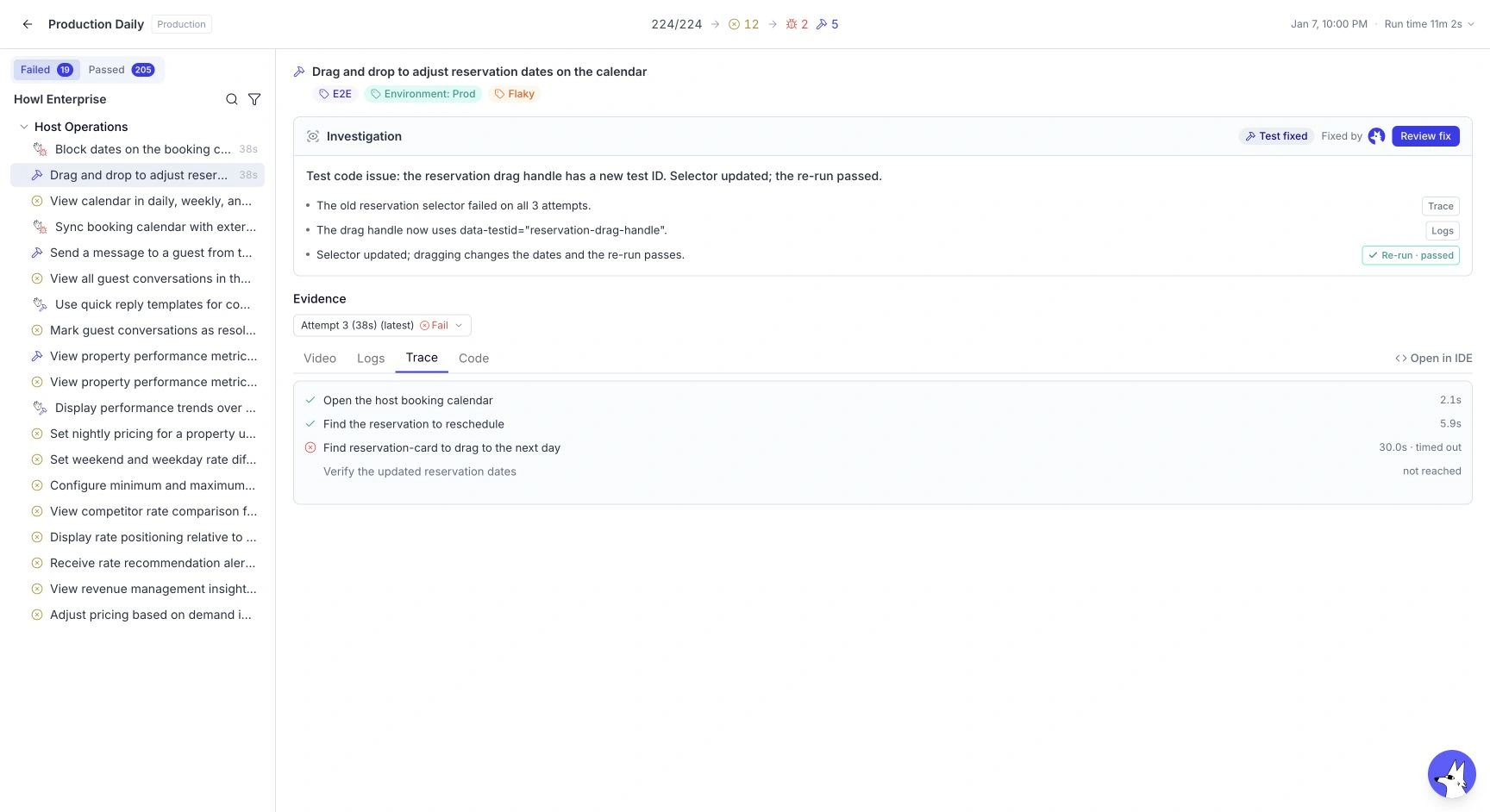
A bug report notifies the customer’s team, so it waits for human confirmation. A test fix is reversible: the agent can apply it and verify a passing re-run, then a person reviews the fix before using it in future runs.

If the agent can’t produce a passing fix, it needs a person’s help.
Claims with receipts
The agent can reproduce a failure without knowing whether the behavior was intentional. I designed the review card to show both its evidence and the question it still needs a person to answer.
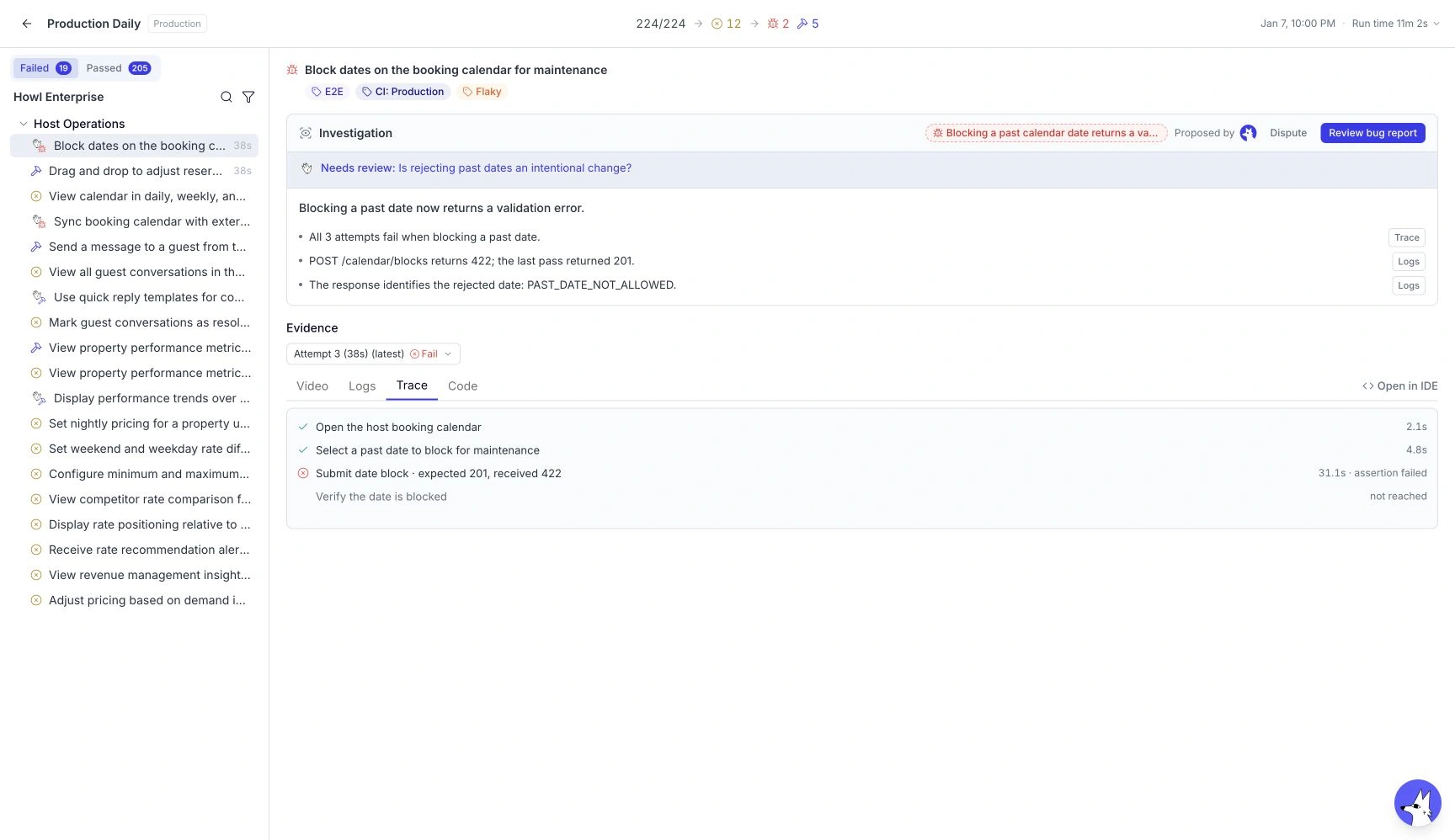
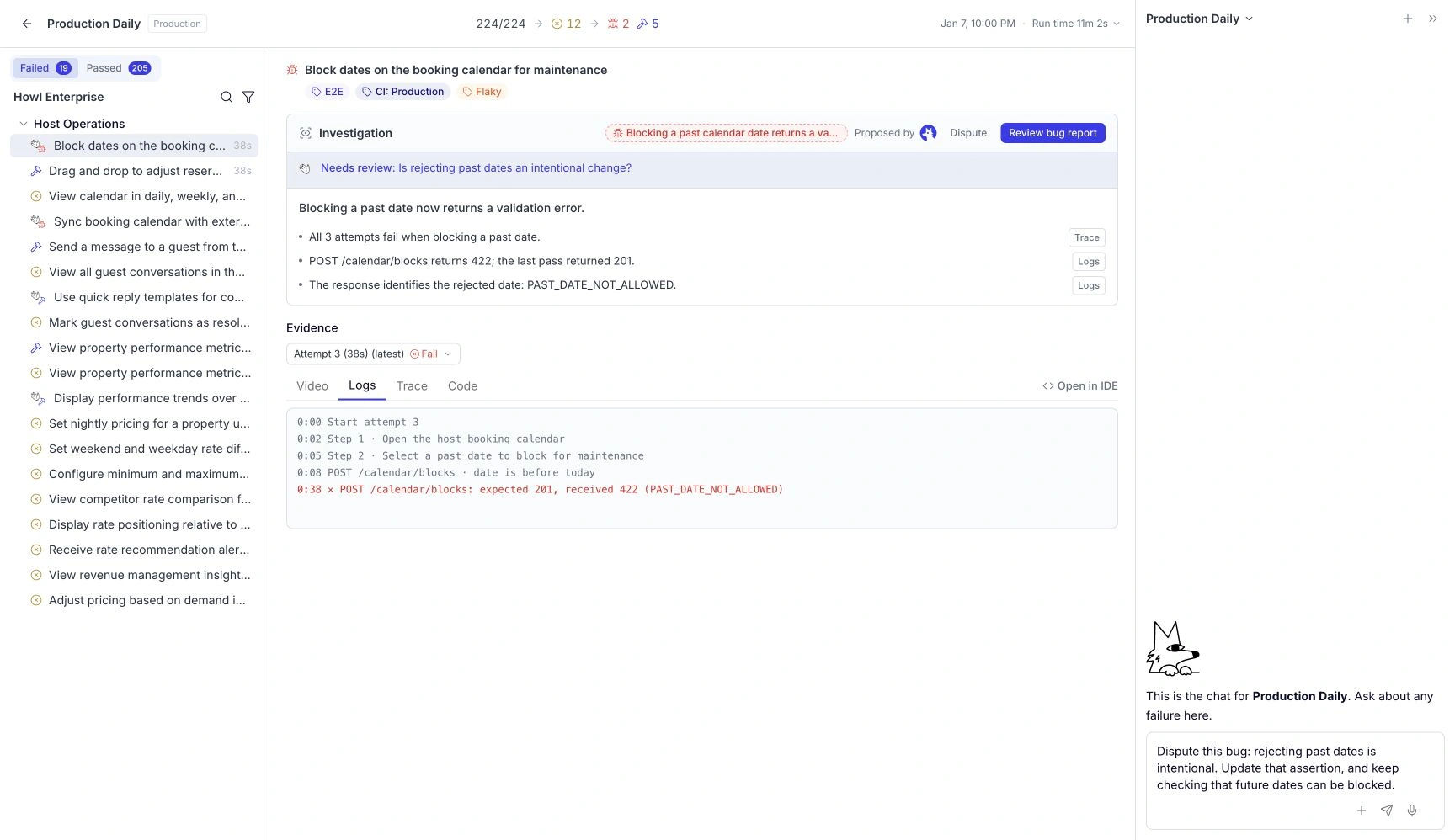
Dispute is a conversation
The reviewer may know something the agent doesn’t. I designed dispute around explaining that missing context, so correcting the agent gives it a starting point for investigating again.
A passing test still needs inspection
We let the agent apply and verify a reversible fix for the current run. But passing isn’t enough if the fix stops checking the behavior that matters. I put the code change beside the re-run evidence so reviewers can judge the fix before using it in future runs.
What guided my iterations
As I iterated, I kept asking: does the evidence make an automatic fix trustworthy? Does disputing feel like correcting a teammate? Is waiting for re-investigation tolerable?
I wanted people to understand the agent’s work well enough to decide what to trust and what to question.